DA Cabaret Voltaire
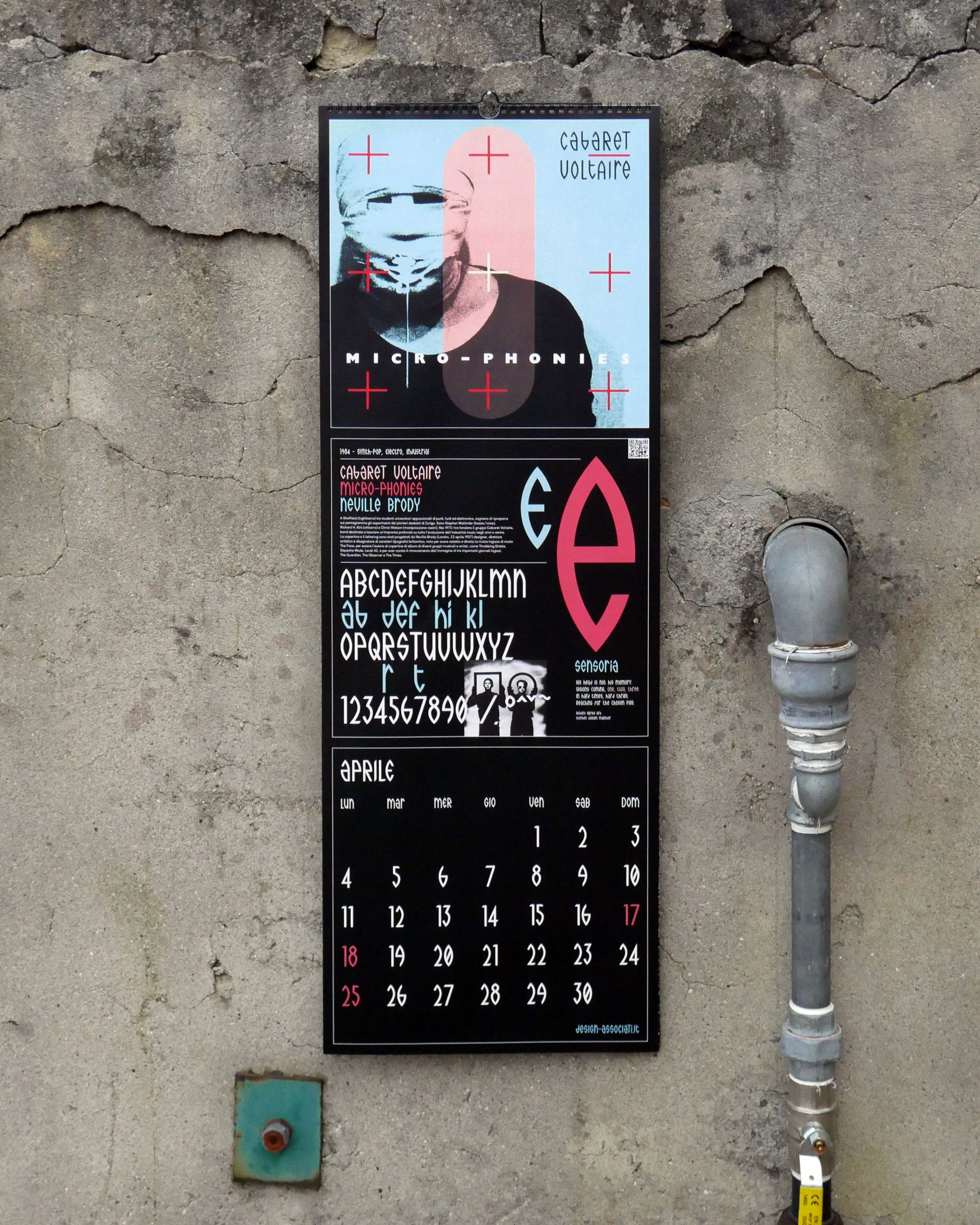
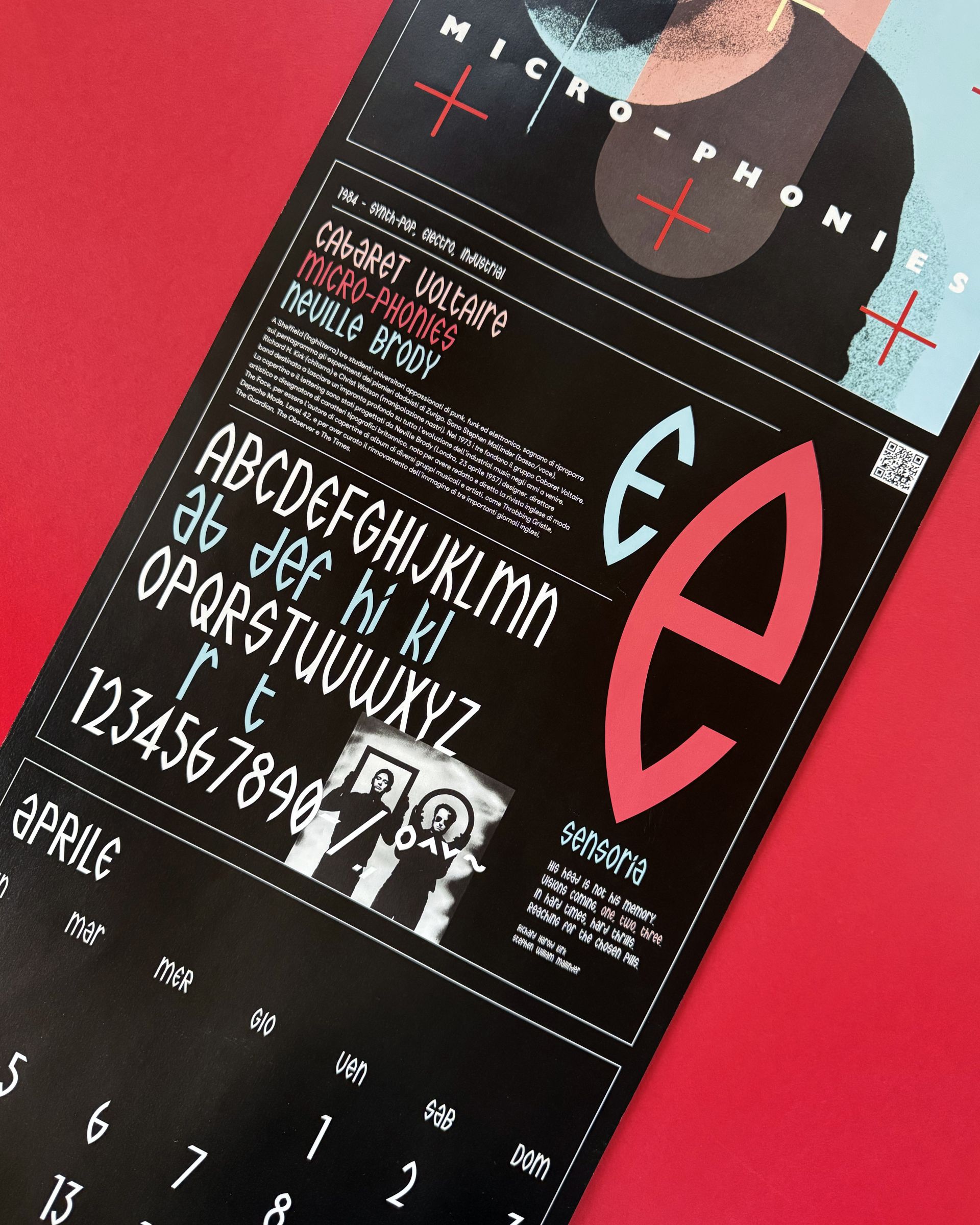
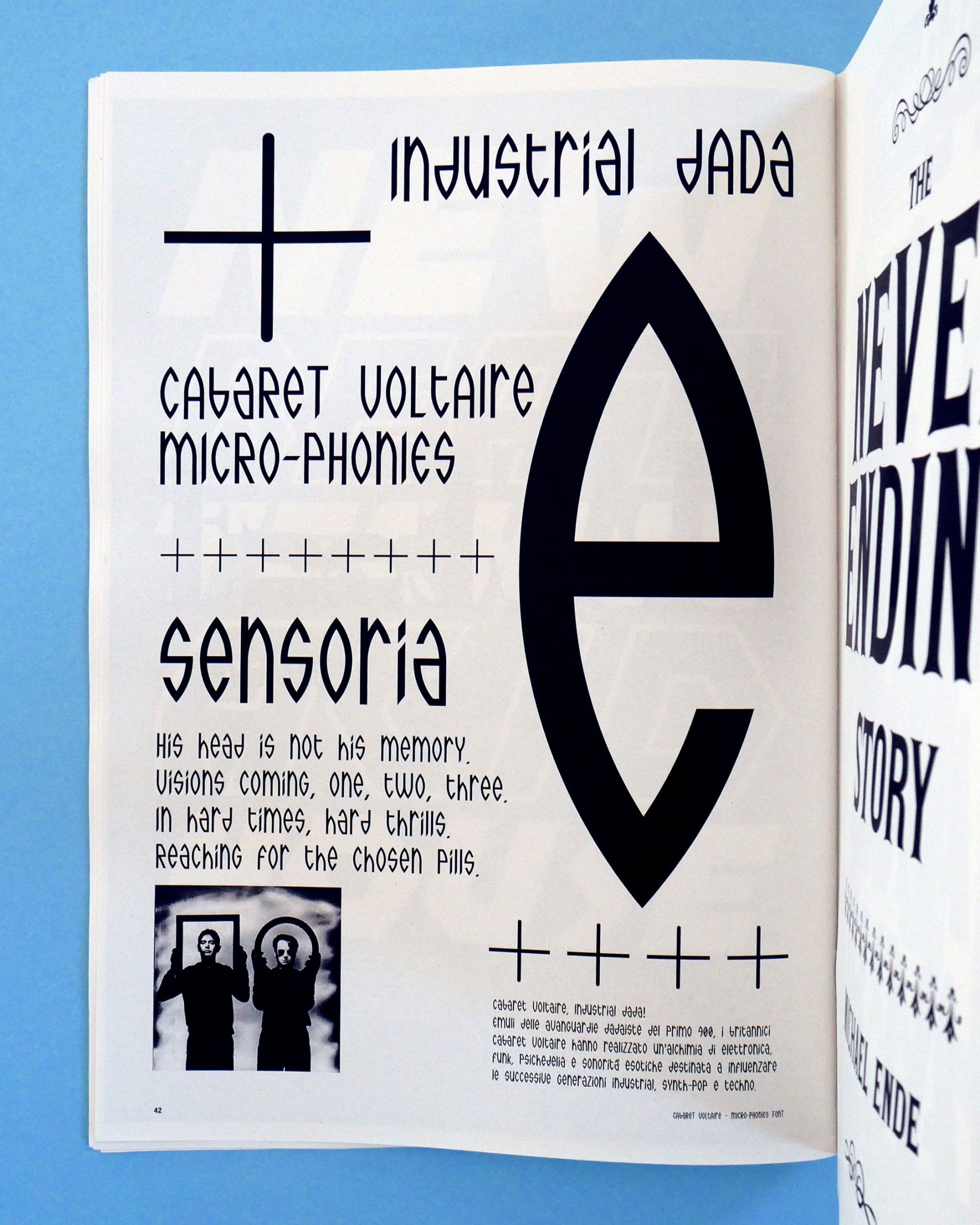
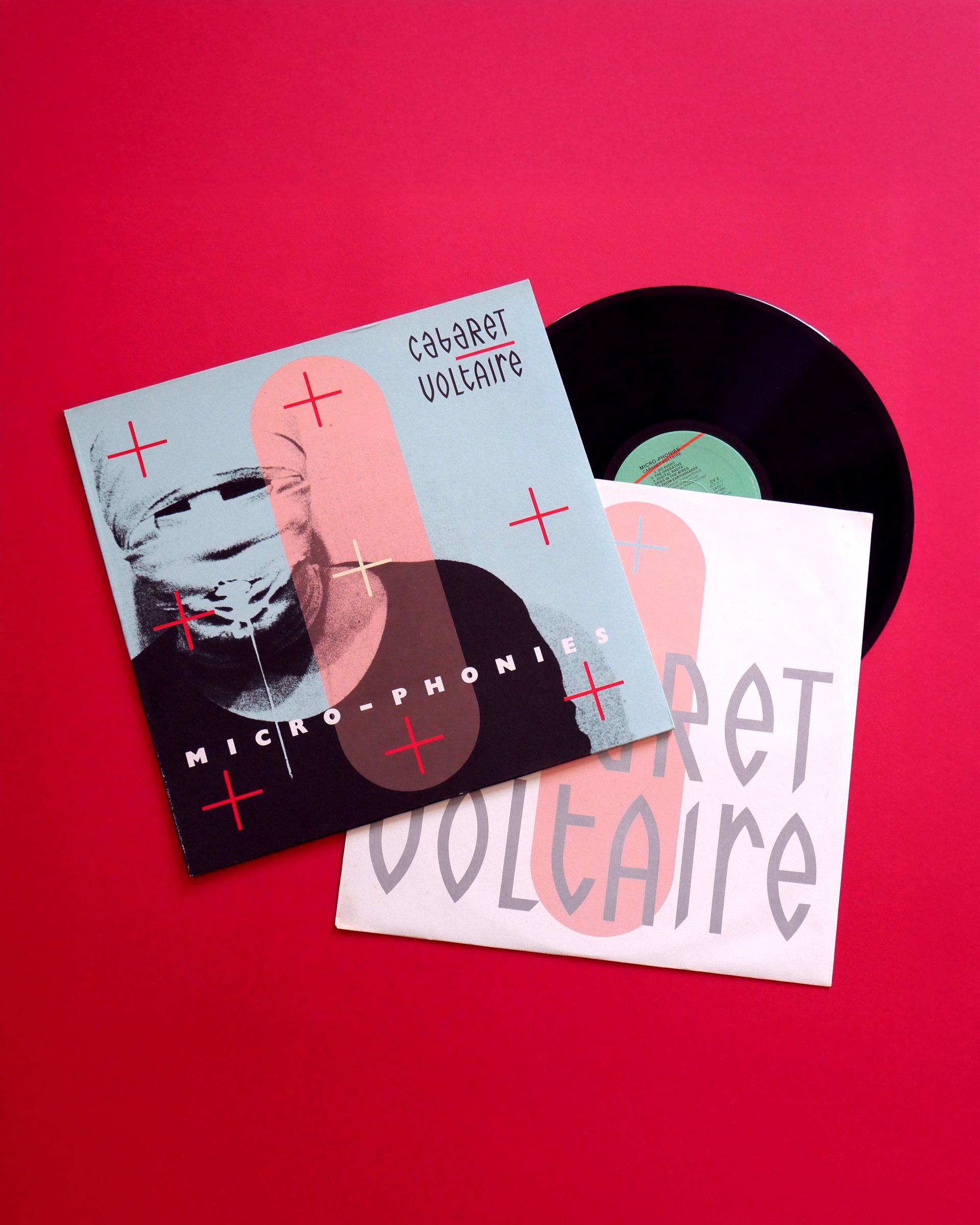
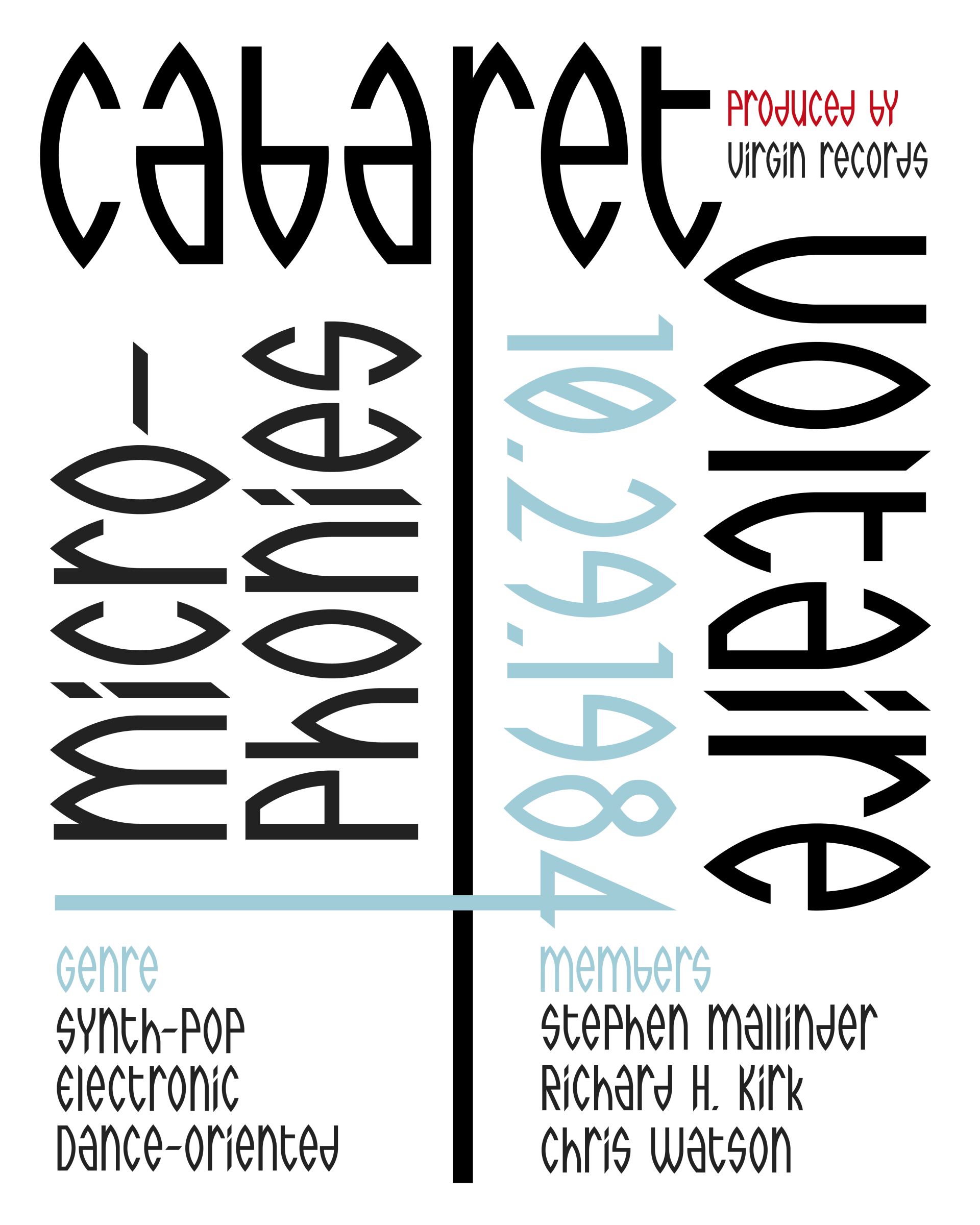
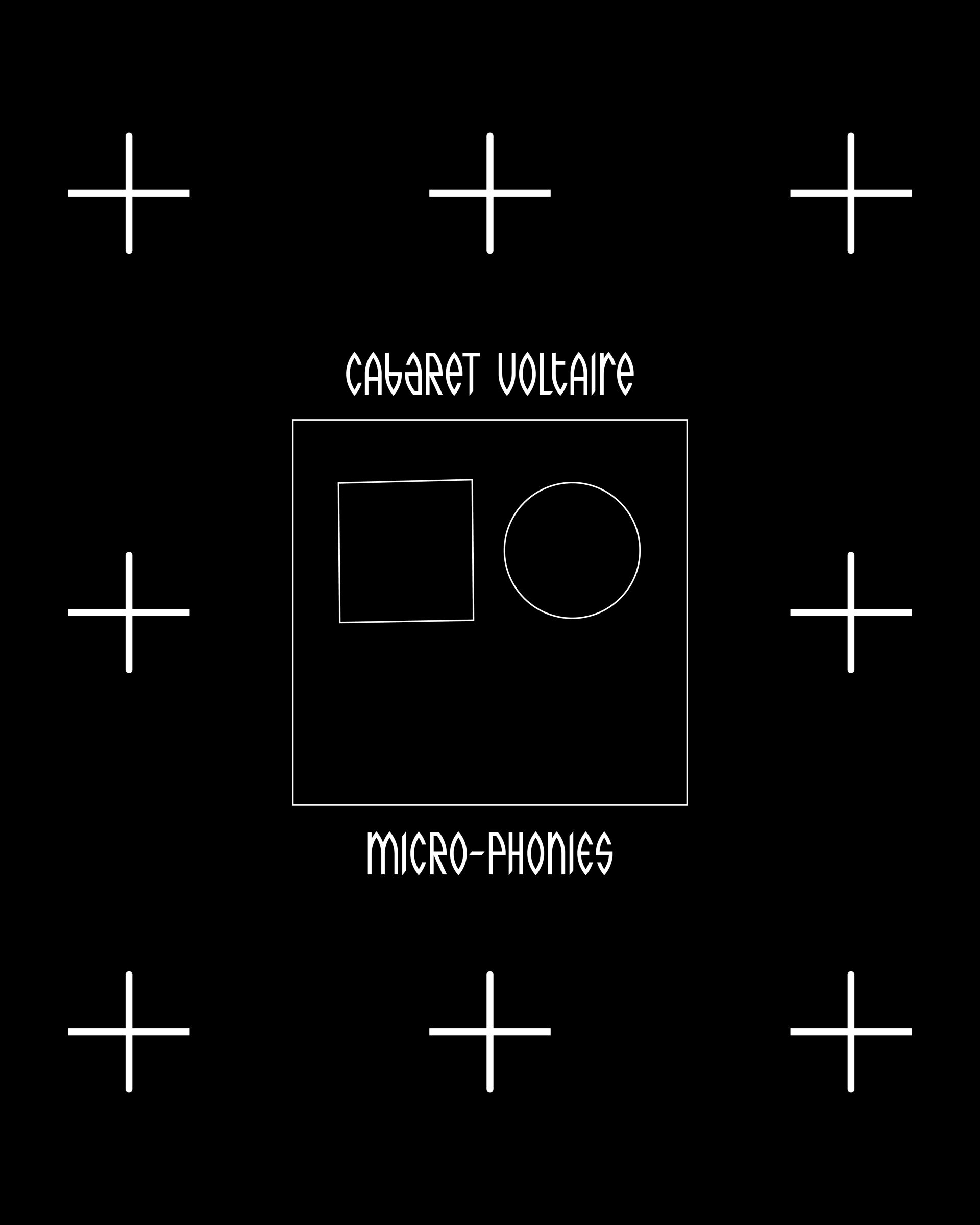
DA Cabaret Voltaire is a typeface developed from the lettering of the Micro-Phonies (1984) album cover by the English industrial band Cabaret Voltaire, designed by Neville Brody. A central figure in British graphic design of the 1980s, Brody defines in this work a hybrid typographic language in which Gothic references, electronic modularity, and graphic synthesis coexist within an essential and strongly characterized structure. The original lettering is here reworked in a systematic form, preserving the tension between typographic construction and expressive mark.
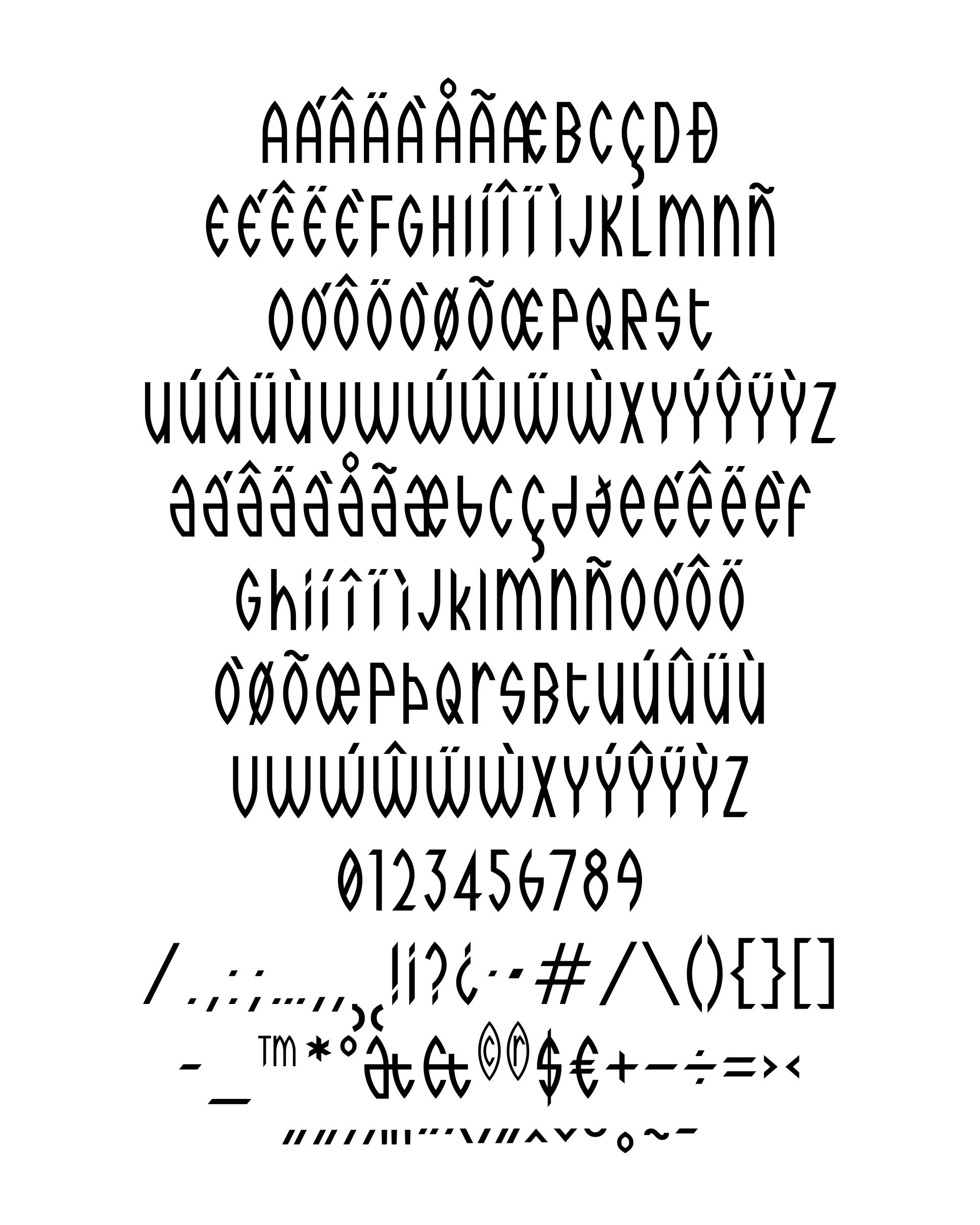
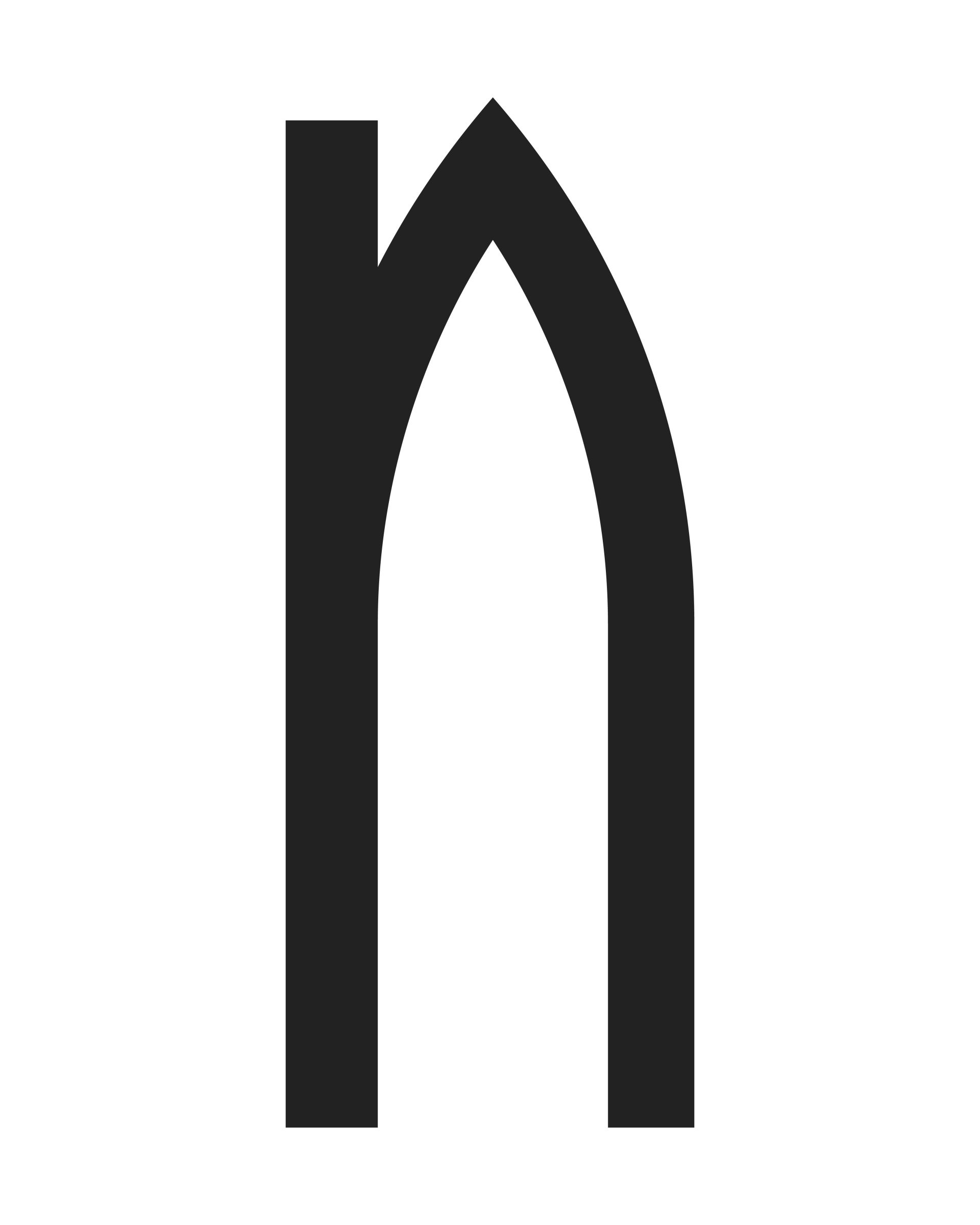
Morphologically, the typeface can be described as a hybrid sans serif with a Gothic matrix, characterized by a pronounced tapering of strokes toward pointed terminals. The letters are inscribed within a roughly rhomboid structure, with compressed vertical axes and narrow proportions. The design alternates taut curves and sharp angles, generating an unstable balance between softness and rigidity. Distinctive features include reduced apertures, triangular counters, and acute terminals that emphasize the vertical rhythm of the text. Some glyphs present unconventional solutions, with variations in terminals and joins that introduce controlled discontinuity.
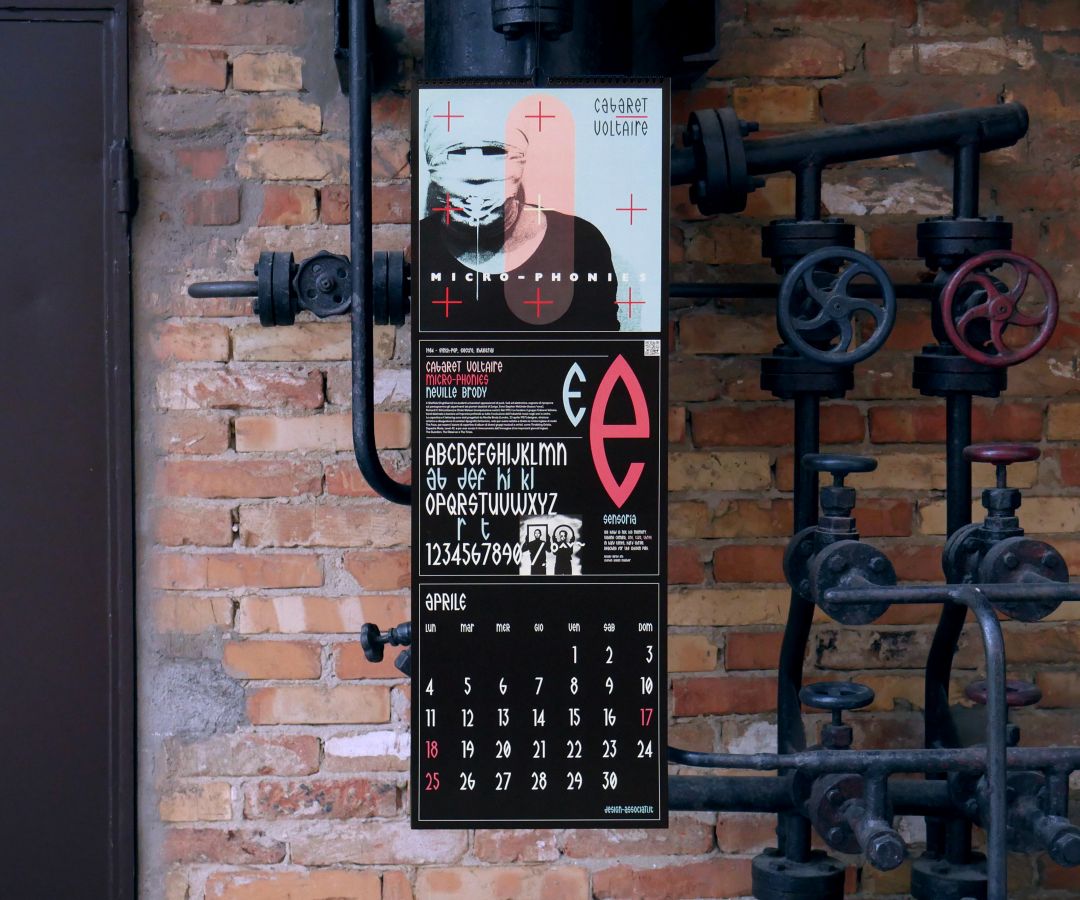
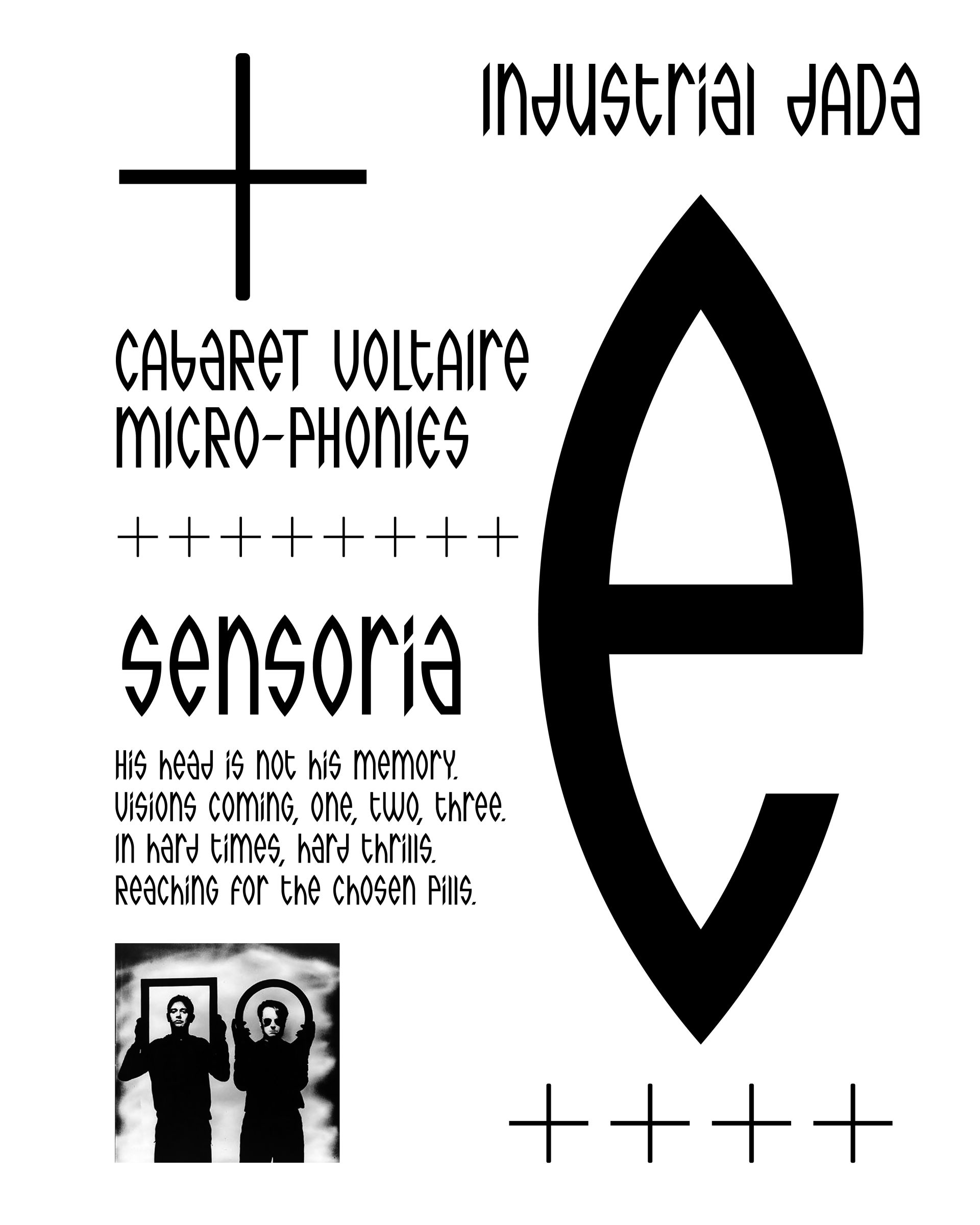
Designed for titling, visual identities, and music-related contexts, DA Cabaret Voltaire translates the synth–industrial aesthetic of the 1980s into typographic language, maintaining a direct relationship between form, sound, and graphic construction.
Glyphs
Basic Latin
Latin-1 Supplement
Latin Extended-A
Supported Languages
Our fonts only support Latin script based languages. The languages listed below is base on the unicode coverage, yet it doesn't ensure the local glyph variations. Feel free to reach out to us for inquiries or to request specific localizations.
Afrikaans, Albanian, Asu, Basque, Bemba, Bena, Breton, Catalan, Chiga, Colognian, Cornish, Croatian, Czech, Danish, Dutch, Embu, English, Esperanto, Estonian, Faroese, Filipino, Finnish, French, Friulian, Galician, Ganda, German, Gusii, Hungarian, Icelandic, Inari Sami, Indonesian, Irish, Italian, Jola-Fonyi, Kabuverdianu, Kalenjin, Kamba, Kikuyu, Kinyarwanda, Latvian, Lithuanian, Lower Sorbian, Luo, Luxembourgish, Luyia, Machame, Makhuwa-Meetto, Makonde, Malagasy, Maltese, Manx, Meru, Morisyen, Northern Sami, North Ndebele, Norwegian Bokmål, Norwegian Nynorsk, Nyankole, Oromo, Polish, Portuguese, Quechua, Romanian, Romansh, Rombo, Rundi, Rwa, Samburu, Sango, Sangu, Scottish Gaelic, Sena, Serbian, Shambala, Shona, Slovak, Slovenian, Soga, Somali, Spanish, Swahili, Swedish, Swiss German, Taita, Teso, Turkish, Upper Sorbian, Uzbek (Latin), Volapük, Vunjo, Walser, Welsh, Western Frisian, Zulu.
Font in use